There was a time when being grounded meant staying inside the house, not losing access to the internet.
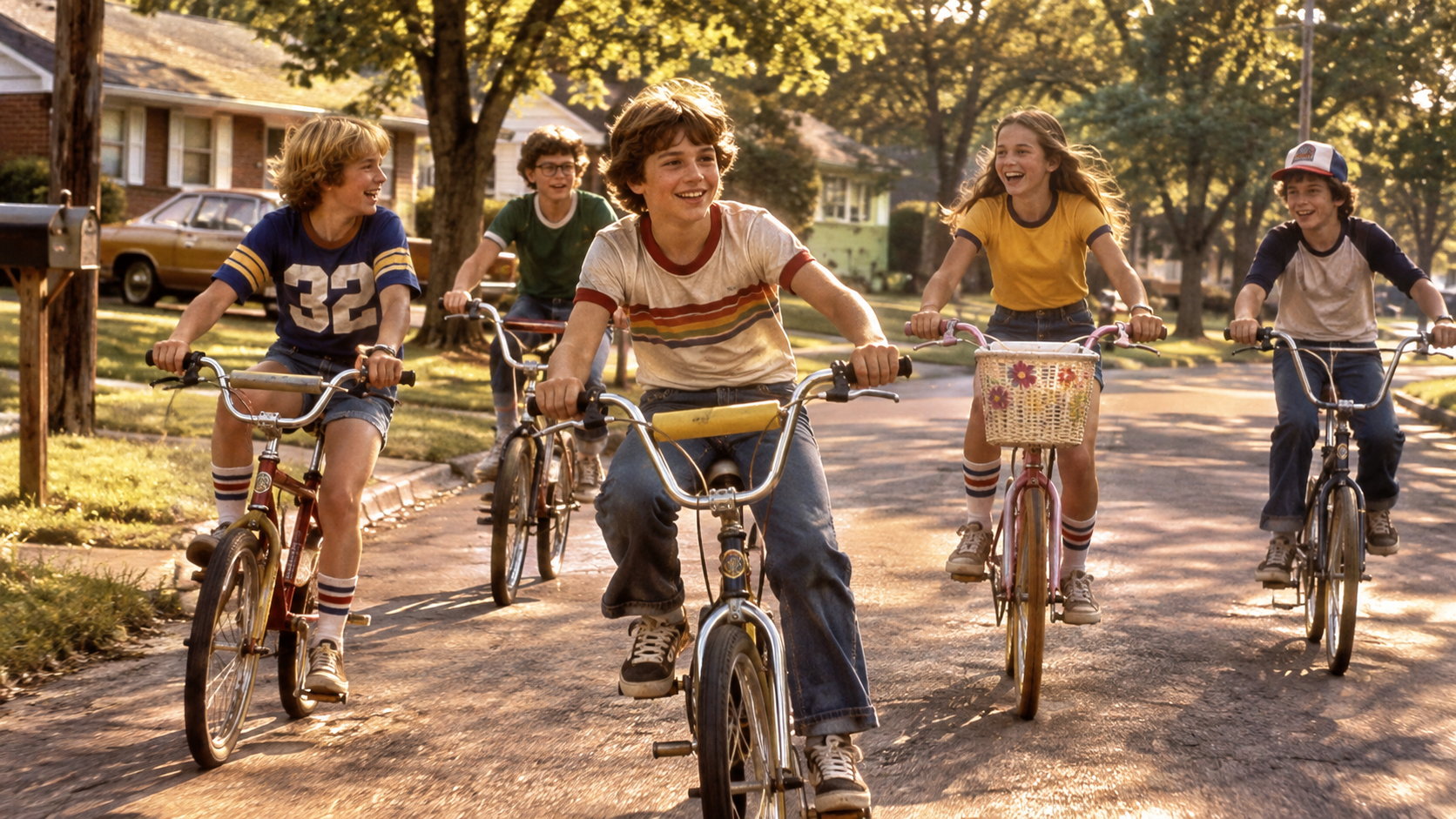
When the streetlights came on, it was time to head home. When the telephone rang, you had no idea who was calling. And when you wanted to spend time with your friends, you rode your bicycle to their house and knocked on the door.
For Generation X, this wasn’t an unusual way to grow up. It was simply childhood.
Born between 1965 and 1980, Generation X experienced something increasingly rare: an analog childhood followed by a digital adulthood.
We remember a world where boredom encouraged creativity, friendships required personal interaction, and childhood adventures weren’t documented for an online audience.
## When Our Bicycles Represented Freedom
For many Gen X children, getting your first bicycle was a significant milestone. Suddenly, the neighborhood became a world waiting to be explored.
We rode BMX bikes, built makeshift ramps, raced our friends and explored vacant lots. A few dollars could buy an afternoon of entertainment at the neighborhood convenience store.
Parents often gave relatively simple instructions: stay out of trouble and be home before dark.
There were no GPS trackers or smartphones to provide constant updates about our whereabouts.
If your parents needed to find you, they might call a friend’s house or drive around the neighborhood.
While that freedom came with risks, it also provided opportunities to develop independence, confidence and problem-solving skills.
## The Latchkey Generation
Changing family structures and growing participation in the workforce meant many Gen X children returned from school to an empty house.
Some carried house keys on strings around their necks. Others knew exactly where the spare key was hidden.
After school, we made snacks, watched television, completed homework and waited for our parents to arrive.
We learned how to prepare simple meals, answer telephone calls and handle everyday responsibilities earlier than some children do today.
Not everyone remembers those experiences positively. For some, the independence was empowering. For others, it was lonely or overwhelming.
Nevertheless, the latchkey experience became a recognizable part of Generation X’s cultural identity.
## Entertainment Was Something We Looked Forward To
Saturday mornings were practically sacred.
Children woke up early, poured bowls of colorful cereal and settled in front of the television for several hours of cartoons.
Scooby-Doo, Super Friends, The Smurfs, Transformers and countless other programs became part of our collective childhood memories.
There was no streaming service allowing us to watch whatever we wanted whenever we wanted.
If you missed an episode, you missed it.
Music required similar dedication. We waited beside the radio with a cassette recorder, hoping the DJ wouldn’t talk over our favorite song.
Creating a mixtape required patience and planning. Receiving one from a friend or romantic interest felt personal because someone had invested considerable time selecting and recording those songs.
## Friendships Happened Face-to-Face
Before social media, maintaining friendships required effort.
We called people on landline telephones, passed handwritten notes at school and arranged gatherings in advance.
If someone said they would meet you at the mall at two o’clock, you expected them to be there.
There was no texting someone from the parking lot to change plans.
Shopping malls, skating rinks, bowling alleys and video arcades became important gathering places.
We learned to navigate conversations, disagreements and awkward social situations without the protection of a screen.
## Learning Through Trial and Error
Before search engines and online tutorials, finding answers often required visiting a library, reading instructions or asking someone for help.
School research projects meant encyclopedias, library catalogs and handwritten notes.
Family vacations involved paper maps and directions scribbled on pieces of notebook paper.
Making mistakes was frustrating, but figuring things out could be deeply satisfying.
Those experiences helped many of us become comfortable with improvisation and adapting when plans went wrong.
## Were the Old Days Really Better?
Nostalgia can sometimes make the past appear more perfect than it actually was.
Modern technology has improved communication, medical care, education and access to information. Today’s children have opportunities and safety tools that previous generations couldn’t imagine.
Still, something valuable can be learned from an unplugged childhood.
Being comfortable with silence, enjoying outdoor activities, building genuine friendships and solving problems independently are skills worth preserving.
Generation X has the unusual privilege of understanding both worlds.
We can appreciate technological progress without forgetting the value of experiences that don’t require an internet connection.
Some of our greatest childhood adventures began with nothing more than a bicycle, a few friends and an entire afternoon ahead of us.
And when the streetlights came on, we knew it was time to go home.
**Join the conversation:** What is one thing about your Gen X childhood you wish today’s children could experience?
*GenX.News — Same Generation. A Different World.*
Explore more on GenX.News
When Saturday Mornings Belonged to Kids: A Gen X Tradition We Still Miss
When Going to the Video Store Was the Highlight of Friday Night